7.7 The four shapes
A lens is one of four castings. Two of them are the same part hung different ways round, so picking those cards reveals a segment for the handedness — a card each would have been four cards for one lens.
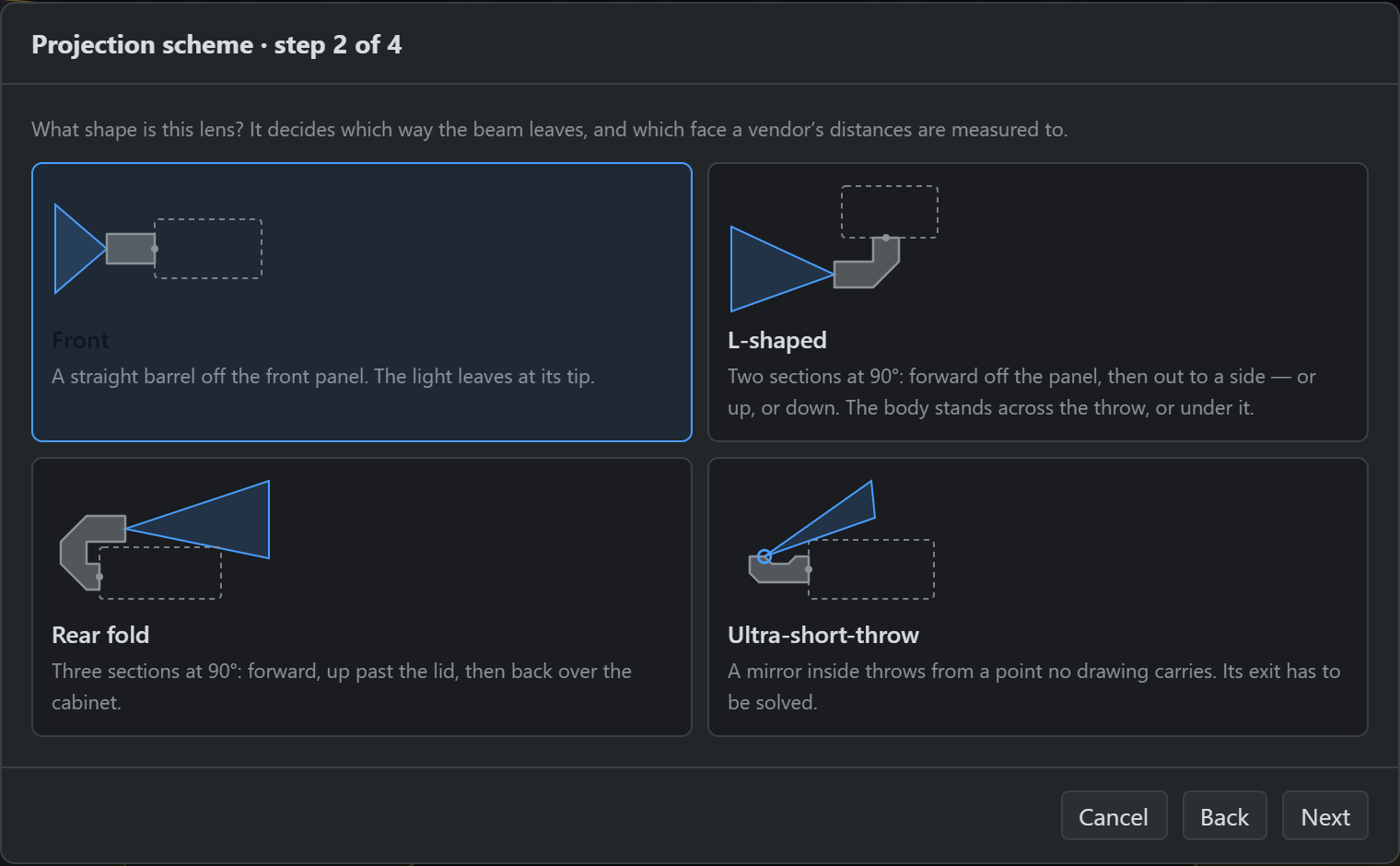
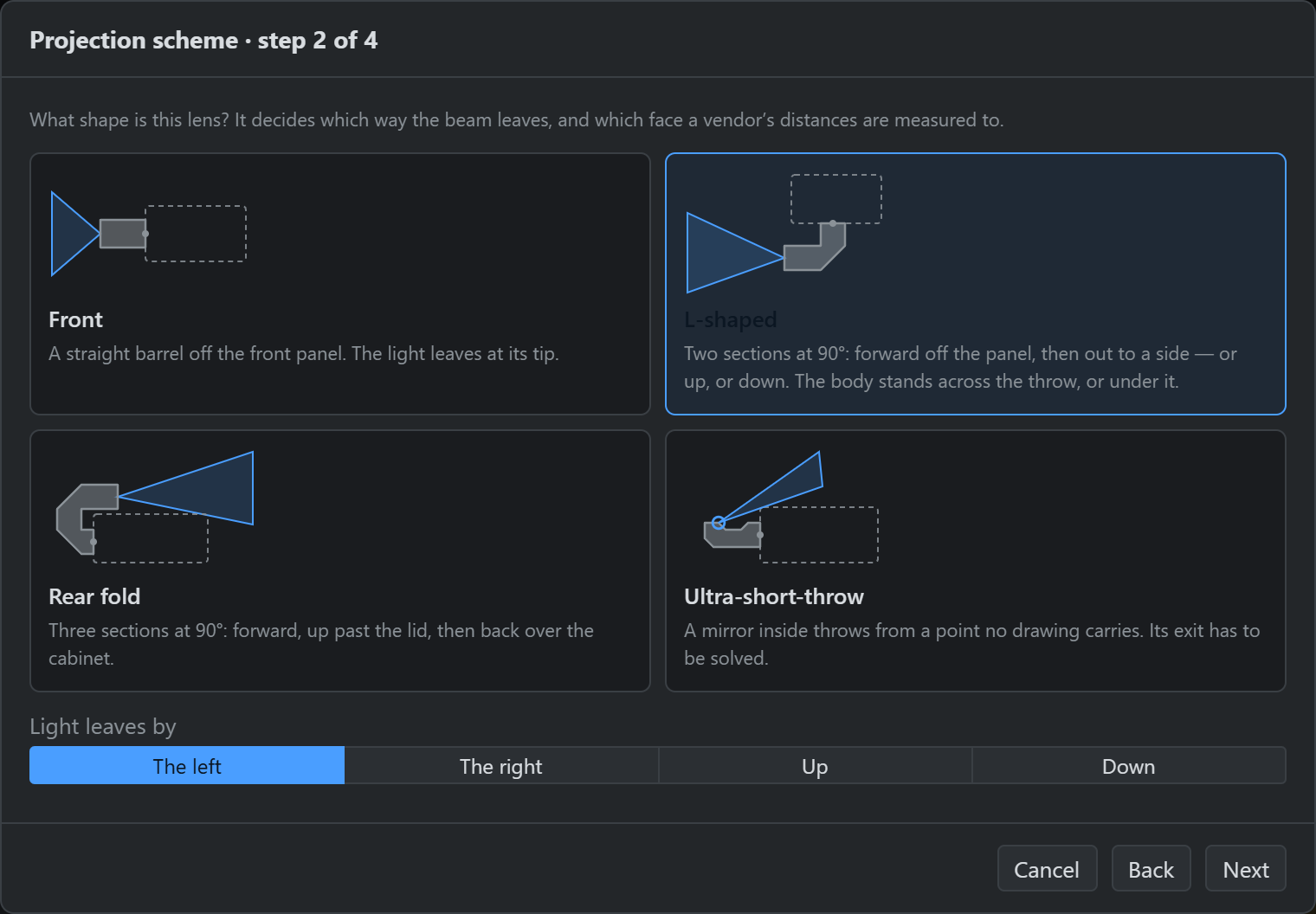
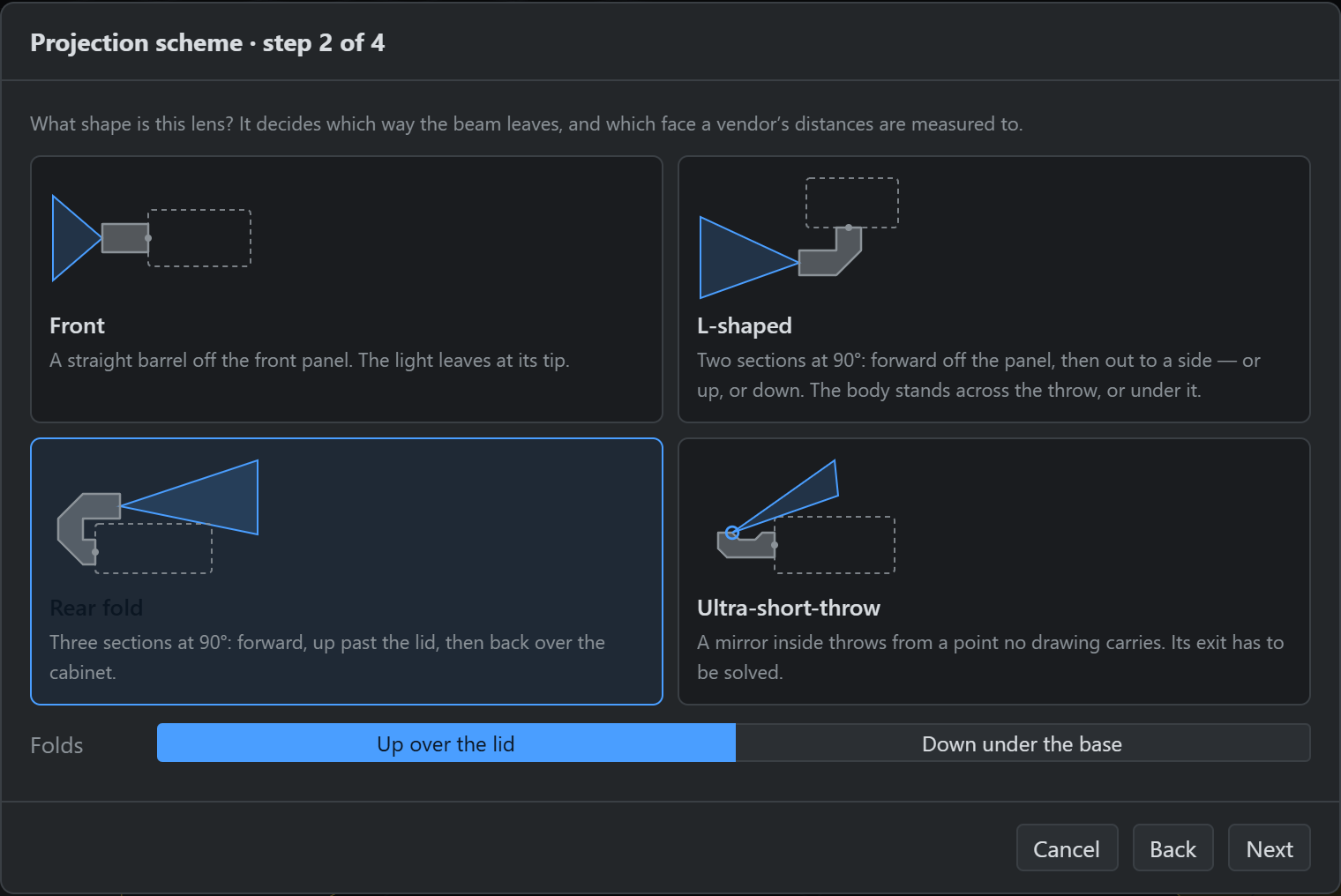
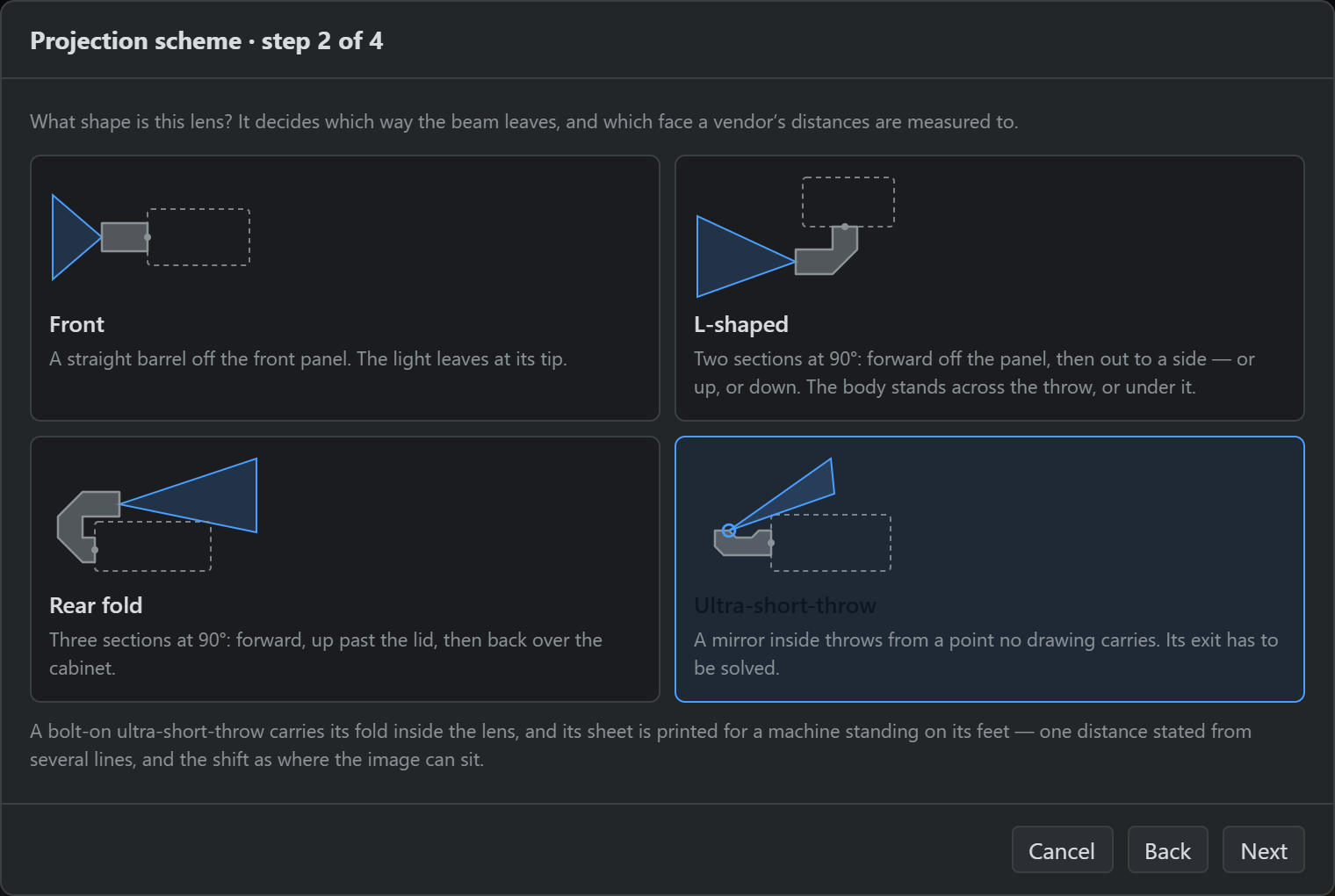
What each is asked for follows from the sheets it is transcribed from — and a column a family could never fill is one it is never shown:
| Shape | Typed sections | Columns it gets |
|---|---|---|
| Front | None — the barrel is what the fit solves. | Distance, Tele, and the image-position pair. |
| L-shaped | Leg 1 mount → elbow, leg 2 elbow → glass, with its own datum. | Distance and Tele, measured to the near face, the lens tip or the far face. |
| Rear fold | Three legs — forward, up past the lid, back over the cabinet. | Distance, Tele, image position. |
| Ultra-short-throw, welded in | The barrel that gets drawn. | Distance, Tele, Drop and Plate → datum. |
| Ultra-short-throw, bolted on | Barrel (front face → throw point) and Head (past it to the end). | Distance and image position. No Tele — every lens of this kind is a prime — and no Drop. |
Where sections are typed they are the authority, not a hint: the casting is what you typed, the beam is derived from it, and the rows contribute the throw ratio, the zoom walk and a cross-check. Where the rows put the throw point somewhere the legs do not, the disagreement is reported in millimetres rather than resolved silently in either direction.
A machine whose lens is welded in gets Front and Ultra-short-throw — no elbow, no rear fold. Those are lenses, not bodies: parts that bolt to a lens mount, which is why they come off by construction. Both bundled catalogues agree — 98 bodies carry a welded-in lens and not one of them turns its light, while all 17 right-angle entries are separate lenses. Offering the card there would offer a machine nobody builds, and picking it would silently yaw the beam 90° into a wall. A layout the four cards cannot express is still typed by hand into the Mounting rows.